Buying an Adult Trike? Measure the Door, the Corner and the Outlet First
Carriage House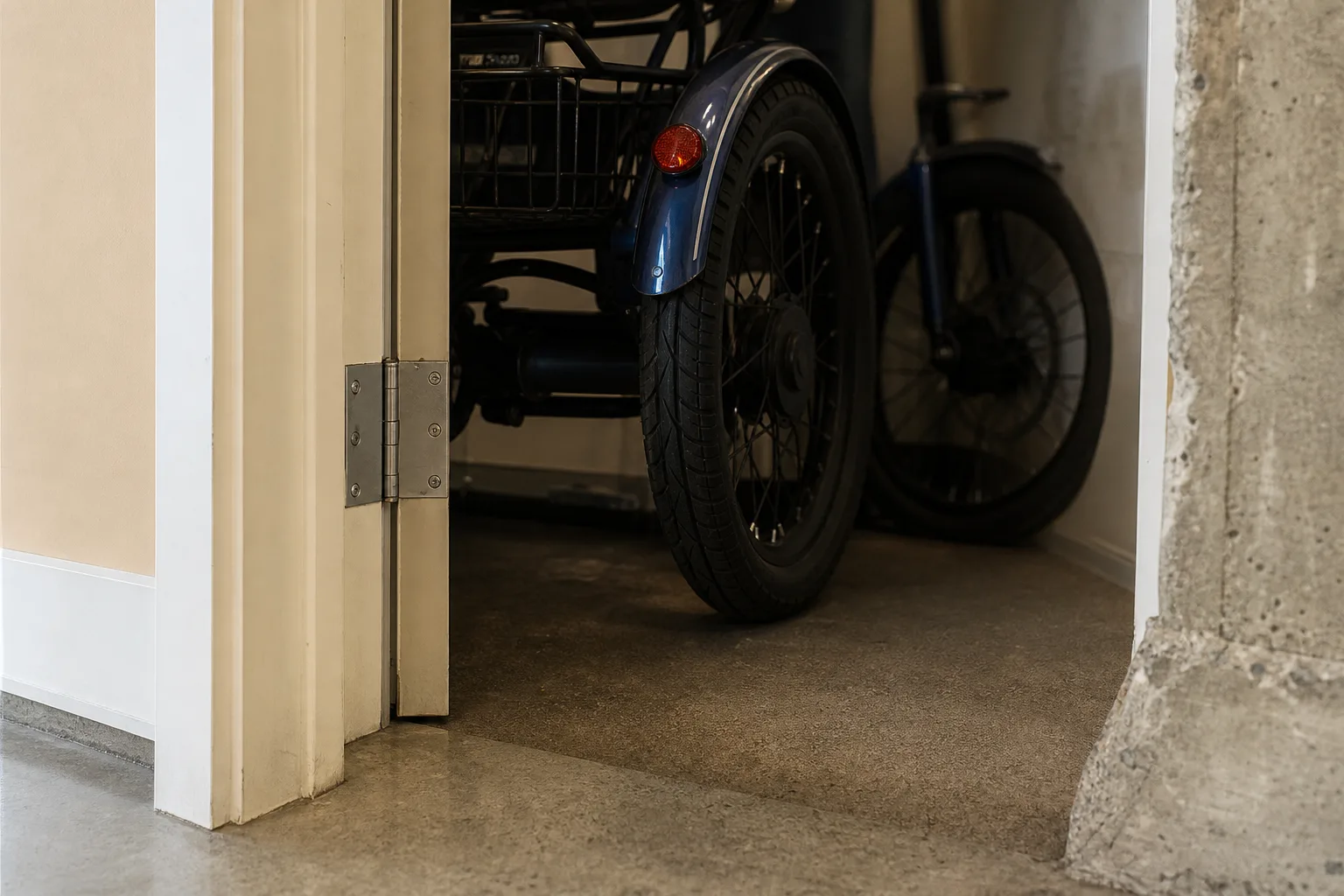
A two-wheeled bike forgives a tight opening because you can tilt it, walk it on one wheel, or turn the bars and squeeze the pedals through at an angle. A trike forgives nothing. It arrives at a doorway square, at full width, with both rear wheels sitting on the floor at the same time, and either it goes through or it does not. The measurement that governs almost every storage decision is the outside width across the rear axle, and that number is worth having on paper before a deposit changes hands.
Three numbers on the machine, not one
Rear track width is the headline figure, and on adult trikes it commonly lands in the low thirties of inches, though folding models and narrow-track designs sit well under that. Two more numbers matter almost as much. Wheelbase, the distance from front hub to rear hubs, decides whether the machine will sit inside a shed without blocking the door. Handlebar width, often wider than the axle on models with swept bars, is the number that scrapes a door frame first. Measure all three yourself, or ask the seller for the outside-of-tire figures rather than frame dimensions.
Manufacturer specifications tend to be honest about length and vague about width, partly because tire choice changes it. A wider tire on the same axle pushes the outside edge out by a fraction of an inch on each side, and fenders add more. If a listing quotes width without saying where it was taken, treat it as approximate and add an inch of margin. The Consumer Product Safety Commission oversees the safety of consumer products including electric cycles, but no rule requires a vendor to publish the one dimension that decides whether your side door works.
Doors, thresholds and the openings that actually vary
Compare the openings in the order you will use them. A standard residential garage side door is often the tightest, and its usable width is the clear opening between stops, not the nominal door size, which can be an inch and a half narrower than the label suggests. A shed door is usually wider but comes with a raised threshold and a ramp problem. An apartment elevator has two constraints, a door width and an interior depth, and the depth is what a long trike fails. Building service doors, often wider, are worth asking about.
The threshold is a separate question from the opening. A trike with a low-slung frame and a rear cargo basket can bottom out on a two-inch shed sill, and a folding ramp fixes it cheaply if you have measured the approach run beforehand. Garage floors that slope toward the door add a few degrees you do not notice on foot but feel through the brakes. A short aluminum threshold ramp, secured rather than loose, turns most of these into non-events.
The corner is harder than the door
Getting through an opening is a width problem. Getting around a hallway corner is a geometry problem, because a trike pivots around its rear axle and needs the swing room for the front wheel plus the tail. A machine that clears a thirty-inch door may still refuse a ninety-degree turn from a thirty-six-inch hall into a thirty-two-inch doorway. Test it with a cardboard rectangle cut to the trike's footprint and slide it along the floor. Five minutes with a box saves a return shipment, and it also shows you the walking line you will use twice a day.
Reversing is the other half. Most people can push a trike forward accurately and steer it backward badly, so plan the storage bay so the machine enters nose-first and leaves nose-first, or leave enough clear floor to turn it in place. Two feet of spare floor on the handlebar side makes the difference between a stored trike and a wrestled one.
Where the outlet sits, and what that costs
Charging happens where the trike parks, which means the outlet decides the parking spot as much as the door does. Detached sheds often have no circuit at all, and running one is an electrician's job with a permit in most jurisdictions. Many owners solve it by removing the battery and carrying it indoors, which works well when the pack detaches with a key and weighs what a full grocery bag weighs. Check that before buying, because a fixed in-frame battery makes a powered outlet non-negotiable rather than convenient.
Charge where you can see it, on a hard surface, near the panel rather than at the end of a long extension cord. That preference narrows the storage candidates fast, and narrowing them early is the point.
| Rear axle width | The outside-to-outside measurement across the two rear tires is the single number that decides which doorways work. Ask for it measured at the tires, not at the frame or axle ends. |
| Clear opening versus door size | A door labeled thirty inches usually gives less than thirty inches of usable space once stops and hinges are counted. Measure between the stops with the door held fully open. |
| Handlebar overhang | Swept or riser bars often extend wider than the rear track and are the first thing to catch a frame. Some bars can be rotated down or the grips shifted inward for storage. |