Choosing, storing and living with adult three-wheeled electric cycles
Shopping for a three-wheeler? Here is what each step up in price actually buys
A plain account of how adult electric trikes are priced, and which of motor, brakes, frame, rack rating and battery capacity changes as you spend more.
Trike pricing rises in visible rungs rather than a smooth curve. Each rung usually changes one or two named components, not the whole machine.
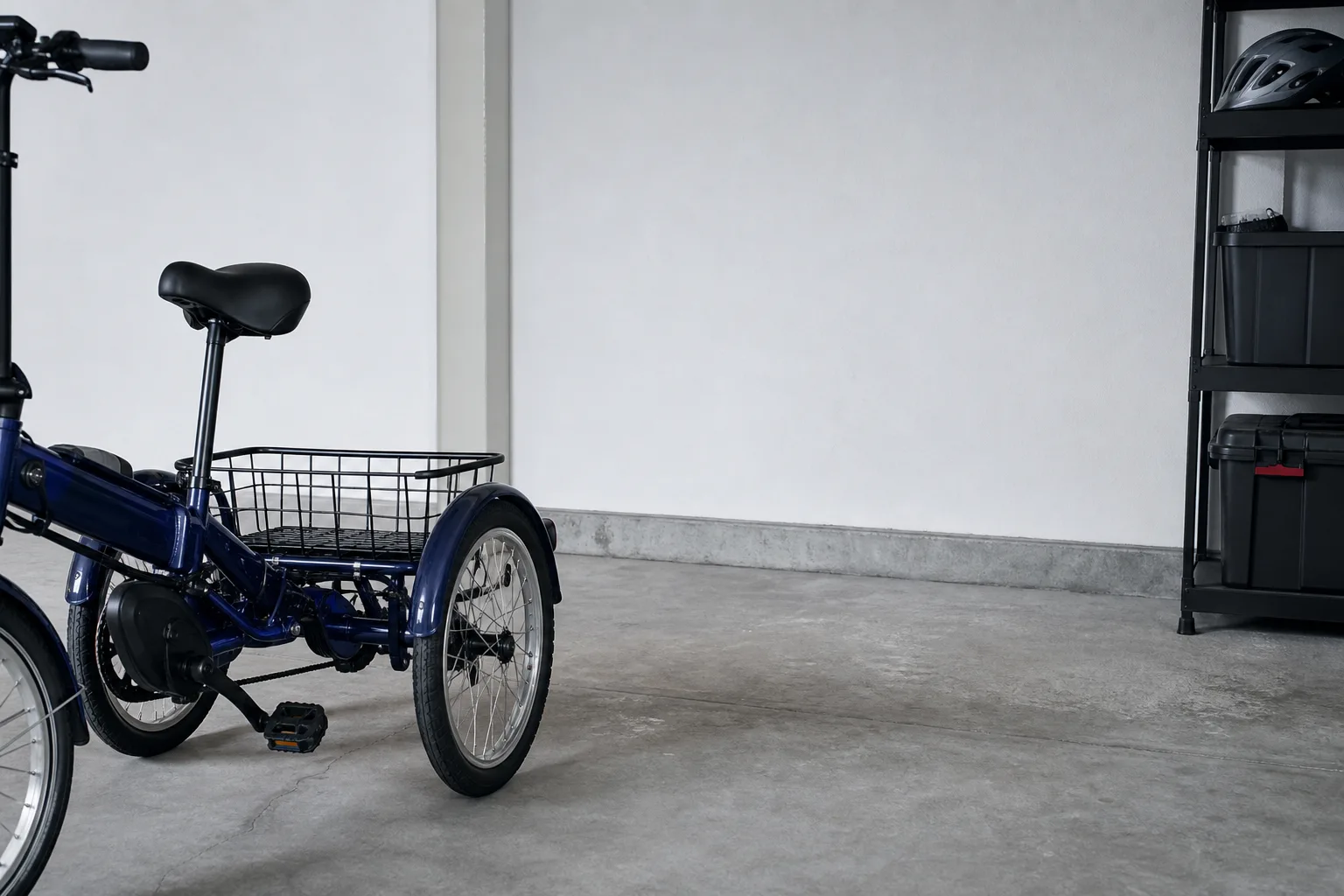
Adult three-wheelers are priced in visible steps rather than a smooth curve, and each step tends to change one or two components rather than the whole machine. That matters, because the difference between the cheapest rideable trike and the one two rungs up is not general quality but a specific list: where the motor sits, whether the brakes are cable or hydraulic, what the frame is made of, how much the rear rack is rated to carry, and how many watt-hours the battery holds. Knowing which rung buys which change is the whole decision.
The floor, and what a rideable machine includes at that price
At the bottom of the market sits a recognizable specification: a hub motor in the rear wheel or in one of the rear wheels, mechanical disc or rim brakes with cable actuation, a steel frame with a welded rear axle assembly, a small battery in the range typical of entry-level pedal assist, and a rack whose stated capacity is modest. Such a trike will carry a person and a bag of groceries on flat ground for a useful distance. It will do it slowly, it will feel heavy at walking pace, and it will need its cables adjusted more often than you expect.
The honest cost at this level is not reliability but effort. Cable brakes on a machine that weighs what a loaded trike weighs require a firm hand and regular adjustment, particularly on a driveway with any grade. Steel frames tolerate abuse and are repairable by any welder, which is genuinely useful, but they add pounds you will feel every time you lift the front wheel over a door threshold. If your route is flat, your storage is at grade, and your loads are light, this band is not a compromise so much as a match.
The first few hundred dollars above the floor
The most common upgrade in the next band is braking, and it is the one worth paying for first. Hydraulic disc brakes hold their adjustment, pull with one or two fingers, and behave the same when wet, which changes how a heavy trike descends a slope with forty pounds in the basket. Close behind comes motor placement. A geared rear hub with a torque sensor rather than a cadence sensor makes the assist arrive when you push instead of a second later, and that single change does more for low-speed control in a garage or on a sidewalk than any amount of extra wattage.
This is also where differential drive starts to appear on delta layouts, meaning both rear wheels are driven and allowed to turn at different speeds through a corner. Single-wheel drive is cheaper and perfectly usable, but it pulls slightly under hard acceleration and slips more readily on a wet or graveled approach. The best summary of what changes across these first steps is the buyer's own account of what surprised them, and one worth reading before shopping is this list of things to know before buying an electric 3 wheel bike, which covers turning radius and weight in useful detail.
Frame material, rack rating and the load you actually carry
Aluminum frames arrive somewhere in the middle of the market and take real weight out of the machine, which you notice when moving it rather than riding it. The tradeoff is repair: an aluminum frame that cracks is usually a replacement rather than a weld, and folding hinges, which appear at similar prices, add mass back in the fittings while making the trike fit through a narrower door. Rack rating rises with price too, and the numbers matter more than the marketing. A rack rated for a light parcel and one rated for a week of groceries with a battery mounted above it are different structures, with different tube diameters and different mounting points.
Read the rating as the manufacturer states it and then read where the battery lives, because a rear-rack battery consumes part of that allowance before you put anything in the basket. Frame-mounted batteries in the downtube free the rack entirely and lower the center of gravity, which is worth a rung of price on its own if you carry anything bulky. The Consumer Product Safety Commission oversees bicycle and lithium battery safety requirements in the United States, and models built to a recognized cell and charger standard tend to sit above the entry band for exactly that reason.
Battery capacity, and what a steep driveway costs in watt-hours
Capacity is the one specification where more money buys a straightforwardly larger number, and the number is watt-hours: volts multiplied by amp-hours, printed on the pack or in the specification sheet. A hill takes energy in proportion to total weight and vertical rise, so a rider plus a heavy trike plus groceries climbing a short steep driveway several times a week draws down a small pack noticeably faster than a catalog range figure suggests. The practical rule is to size the pack for the loaded, hilly version of your route, then treat the flat-and-empty range as headroom rather than as the plan.
Spending upward from there buys a second useful thing: sustained power rather than peak power. A controller and pack that can hold current through a two-minute climb without cutting out is a different experience from one that surges and then fades, and that capability tracks battery quality more than motor labeling. If your storage is at the top of a slope, this band pays for itself in the first month of not walking the trike up.
The cost of the decision, stated plainly, is that money spent at the bottom buys mobility and money spent above it buys control, capacity and durability in that order. Set the floor by your route rather than your budget, add hydraulic brakes if there is any grade at all, add rack rating if you shop for a household, and add watt-hours last, once you know how far the loaded machine actually has to go.